Loading...

Find Equipment Manuals
Loading...
Find Equipment Manuals
Keep your HVAC system running smoothly and reliably with Carrier belts from Parts Town. These are real OEM parts that are designed to ensure a perfect fit and function with the equipment. We offer same day shipping on all in-stock Carrier pulleys until 9 pm ET, Monday through Friday. That means you can address any operational issues quickly, letting the HVAC system provide comfortable climate control with minimal interruption.
Keep your HVAC system running smoothly and reliably with Carrier belts from Parts Town. These are real OEM parts that are designed to ensure a perfect fit and function with the equipment. We offer same day shipping on all in-stock Carrier pulleys until 9 pm ET, Monday through Friday. That means you can address any operational issues quickly, letting the HVAC system provide comfortable climate control with minimal interruption.
Carrier belts play a pivotal role in ensuring the smooth operation of your HVAC units. Specifically designed to transmit power efficiently between the motor and the fan or compressor, these Carrier sheaves are key to maintaining system reliability and performance. By choosing genuine, OEM parts from Parts Town, you're ensuring your HVAC system operates at peak efficiency. We make it easy to maintain and repair any worn down parts, so your system can get back to keeping spaces comfortable.
In HVAC systems, pulleys and sheaves are essential for the optimal functioning of the belts that power the fan and compressor motors. Their size and configuration are key factors in determining the motors' operational speed and overall efficiency. Proper sizing and precise alignment of pulleys and sheaves are crucial for maintaining the appropriate belt tension and ensuring seamless operation.
How often HVAC belts should be replaced depends on the type, the specific application, and the operating conditions. Generally, it's recommended to inspect them at least every six months for signs of wear, such as cracking, fraying, or glazing. If you are worried and want to get ahead of broken parts, replacing the belt every year helps prevent unexpected failures and fraying. Some may need to be replaced more frequently for those in environments with high usage or harsh conditions. Always refer to the manufacturer's guidelines for the most accurate maintenance schedule for your specific HVAC system.
Adjusting the tension on a belt can be different for specific units and model types. For general tension adjustment, first turn off the power to the HVAC unit for safety. Locate the motor mount or tensioning screw and loosen the mounting bolts slightly, then turn the tensioning screw or move the motor mount until it feels firm but not overly tight. Over-tensioning can cause excessive wear on bearings and the belt itself, while insufficient tension can lead to slippage and reduced efficiency.
A squealing sound from a belt usually means that it is either too loose or has become worn out. Insufficient tension can cause malfunctioning that results in a sharp, high-pitched noise. This compromises the operational efficiency of the HVAC system and could result in overheating or damage to the system. Furthermore, a belt that is old, shows signs of cracking, or has a glazed appearance might still produce a squealing noise, even when the tension is adequately adjusted, because it cannot adequately grip the pulleys.


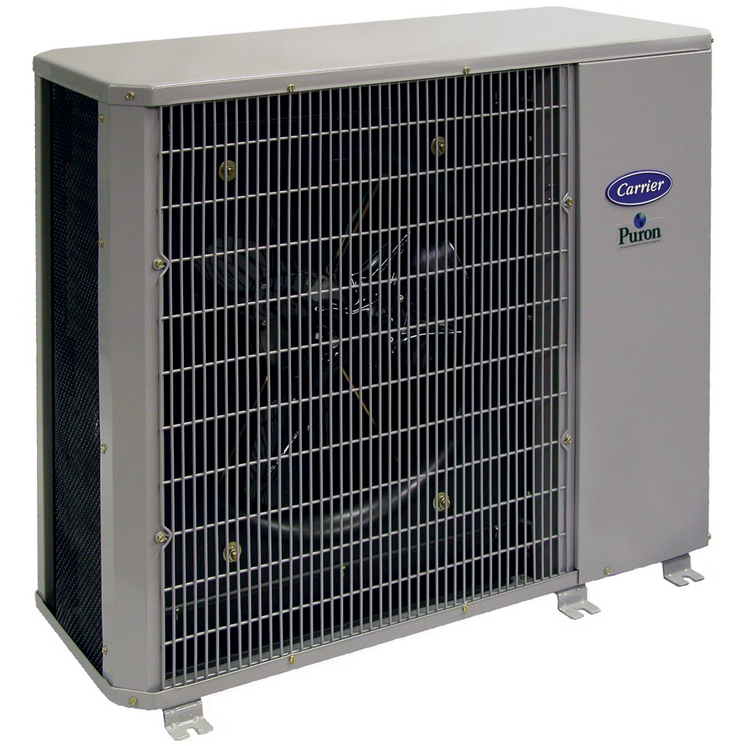
Carrier Comfort - 3.5 Ton 13 SEER Air Conditioning Condensing Unit (460-3)
Manufacturer:
Carrier

Carrier Comfort - 4 Ton 13 SEER Air Conditioning Condensing Unit (460-3)
Manufacturer:
Carrier

Carrier Comfort - 5 Ton 13 SEER Air Conditioner Condensing Unit (460-3)
Manufacturer:
Carrier